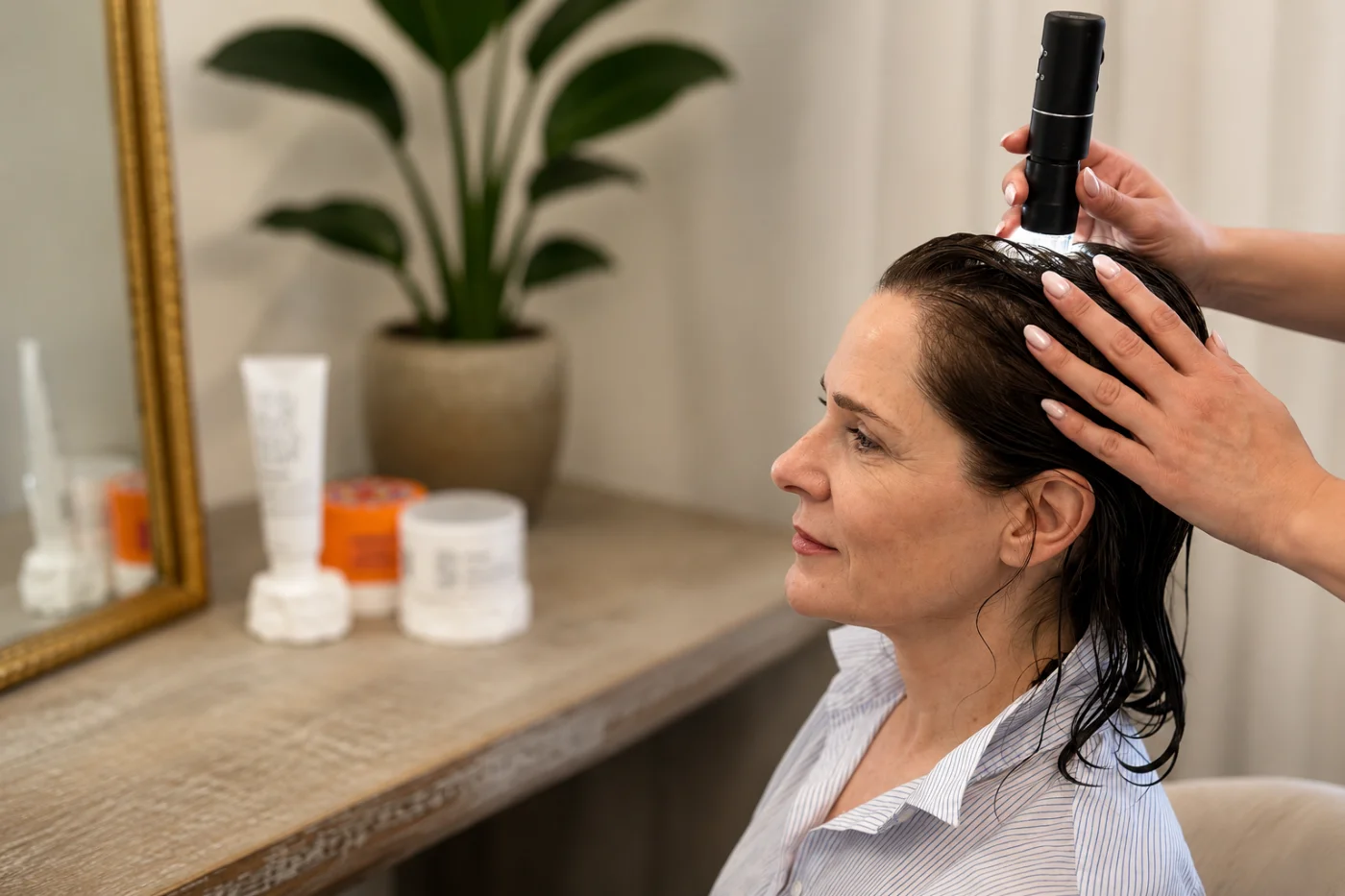
Finding more hair in the shower drain than you used to is one of those things that unsettles you slowly. It happens over weeks, sometimes months, until one day you cannot stop noticing it. If you have searched for a scalp treatment for hair loss in Alpharetta, you are probably already past the point of ignoring it.
The honest answer is that hair loss has several different causes, and no single product or treatment addresses all of them. What actually helps is knowing which one you are dealing with before you spend money guessing.
Before you buy anything
Why Guessing Is the Wrong First Step
Most people respond to hair loss by buying something: a serum, a thickening shampoo, a supplement recommended by a friend. The problem is that hair loss in women can come from very different places, and a product built for one cause can do nothing for another.
Common causes include androgenetic (pattern) hair loss, telogen effluvium triggered by stress, illness, or the months after giving birth, hormonal shifts related to thyroid function or perimenopause, nutrient deficiencies such as low iron or vitamin D, scalp inflammation or buildup that interferes with the follicle, and tension from styling habits over time.
Two people with the same visible symptom, thinning at the part line, can be dealing with completely different underlying situations. Treating the symptom without understanding the cause rarely produces a real change.
The clinical approach
What Trichology Actually Looks At
Trichology is the clinical study of the scalp and hair, and it approaches hair loss the way a dermatologist approaches skin: by examining the follicle directly rather than reacting to what is visible on the surface.
At GAIA Head Spa, every session includes a microscope scalp analysis. Your esthetician looks directly at the follicles and shows you what they see on screen: signs of miniaturization, inflammation, sebum buildup blocking the follicle opening, and hydration levels. That is information you cannot get from looking in a mirror.
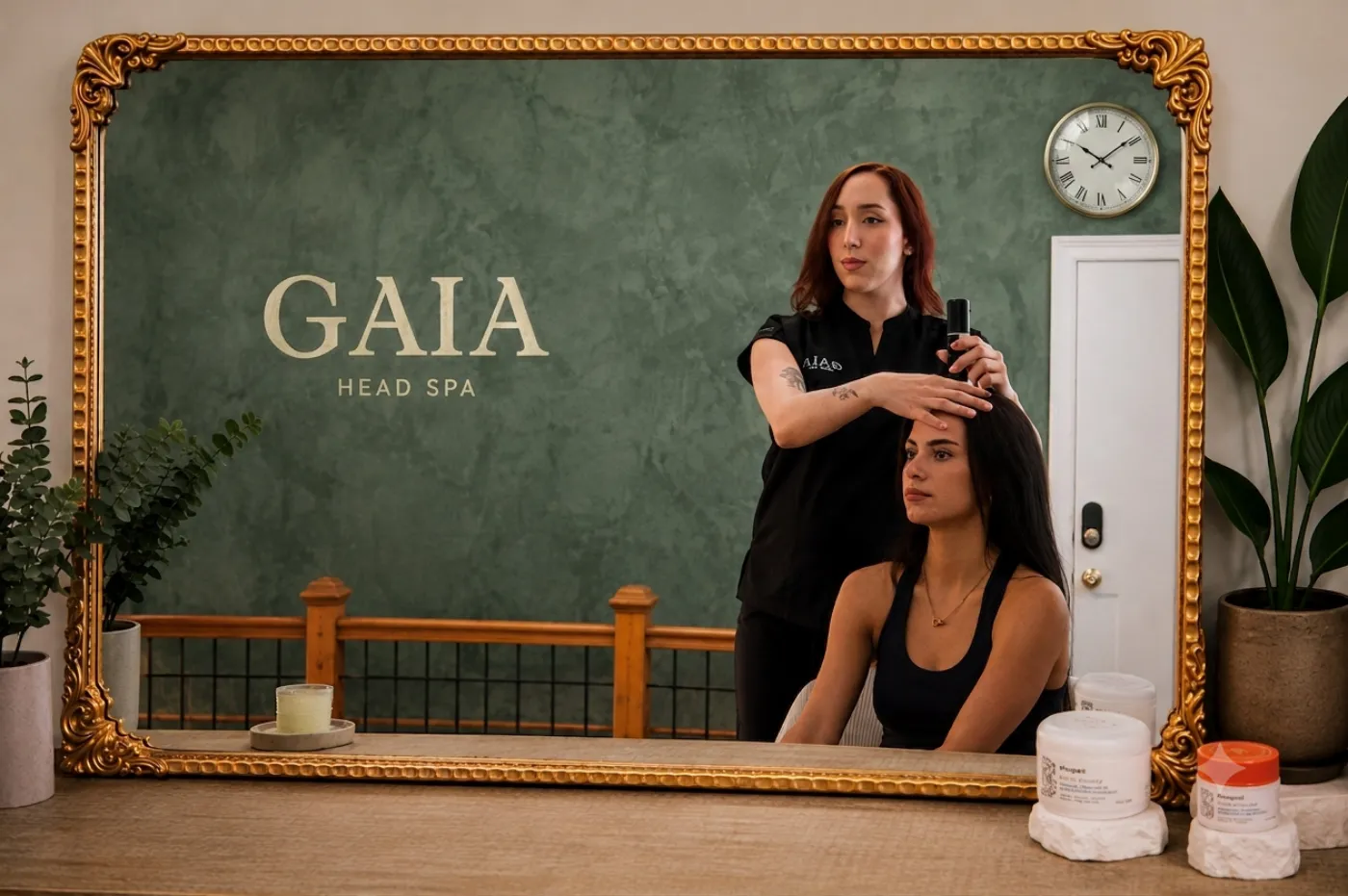
The microscope analysis shows your follicles on screen before any treatment begins
Honest expectations
What the Analysis Can Tell You, and What It Cannot
This is worth being direct about. GAIA is not a medical provider and cannot diagnose conditions such as alopecia areata, thyroid disorders, or hormonal imbalances. What the scalp analysis can do is show visible, follicle-level indicators, buildup, inflammation, and patterns consistent with miniaturization, that inform how a scalp treatment is approached.
If what your esthetician sees suggests something that needs medical evaluation, a responsible provider tells you that and points you toward a dermatologist rather than trying to treat around it. Scalp care is not a replacement for medical care when medical care is what a situation actually calls for.
What treatment actually does
How a Scalp Treatment Supports Healthier Hair Growth
For follicles that are inflamed, congested with buildup, or simply not getting enough circulation, a scalp treatment creates a better environment for them to function. Removing buildup clears the follicle opening. Massage improves blood flow that carries nutrients to the scalp. Halo therapy and steaming allow targeted products to absorb more effectively than they would from a bottle applied at home.
This will not reverse genetic hair loss, and no honest provider should suggest that it will. What it does is support the follicles that are still active, which for many women is a meaningful part of managing hair loss alongside whatever else their situation requires.

Scalp massage, halo therapy, and steaming create a better environment for active follicles
Your first visit
What to Expect at Your First Session
Your session starts with a conversation: how long you have noticed the change, whether it happened suddenly or gradually, your health history, and your current routine. Then comes the microscope analysis, followed by a treatment built around what it reveals. Before you leave, your esthetician walks you through practical adjustments for home, from washing habits to product choices.
Should You See a Doctor First?
If your hair loss has been sudden, patchy, or significant over a short period of time, see a dermatologist or your physician first. A scalp treatment works well alongside a medical diagnosis and plan. It is not a substitute for one when something looks medically concerning.
Leave a Reply